
Top articles
- Wear-Resistant Ceramic Tiles: Industrial Wear Protection Solution
- New Benchmark in Impact Resistance and Wear Protection:Three-in-One Ceramic Vulcanized Liners
- Wear-Resistant Ceramic Liners for Cyclone Separators
- What is a wear-resistant ceramic composite pipe?
- Performance Advantages and Application Fields of Alumina Ceramic Tubes
- Wear-Resistant Alumina Ceramic Liner Plate: Technical Specifications and Application Overview
- Wear-Resistant Alumina Hexagonal Ceramic Liner Tiles: A Reliable Choice for Industrial Wear Protection
- Wear-Resistant Alumina Ceramic Lining Bricks: A High-hardness, Long-Life Grinding Solution
- Alumina Ceramic Grinding Balls: High-Purity, Wear-Resistant Grinding Media
- Visit Us at UGOL ROSSII & MINING 2026 – Booth 1-D22
Latest articles
- Wear-Resistant Ceramic Tiles: Industrial Wear Protection Solution
- New Benchmark in Impact Resistance and Wear Protection:Three-in-One Ceramic Vulcanized Liners
- Wear-Resistant Ceramic Liners for Cyclone Separators
- What is a wear-resistant ceramic composite pipe?
- Performance Advantages and Application Fields of Alumina Ceramic Tubes
- Wear-Resistant Alumina Ceramic Liner Plate: Technical Specifications and Application Overview
- Wear-Resistant Alumina Hexagonal Ceramic Liner Tiles: A Reliable Choice for Industrial Wear Protection
- Wear-Resistant Alumina Ceramic Lining Bricks: A High-hardness, Long-Life Grinding Solution
- Alumina Ceramic Grinding Balls: High-Purity, Wear-Resistant Grinding Media
- Visit Us at UGOL ROSSII & MINING 2026 – Booth 1-D22
Your browsing history

How to Choose Wear-Resistant Alumina Ceramic Lining Tiles?
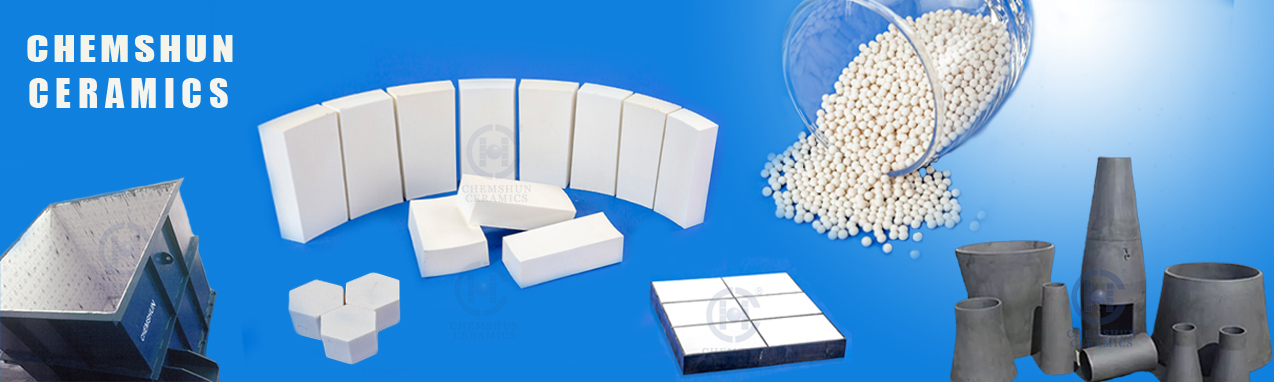
When selecting wear-resistant alumina ceramic lining tiles, key considerations include the material's physical properties, structural design, and suitability for working conditions. Alumina content is a critical indicator, typically requiring over 92% to ensure excellent hardness and wear resistance. Density should exceed 3.6 g/cm³, with Rockwell hardness not less than HRA85. For high-impact environments, models with alumina content above 95% are recommended, offering compressive strength over 850 MPa. Additionally, verify compliance with standards such as GB/T 5593 or ASTM C773 to guarantee performance reliability.
The structural design and installation method directly affect service life. Monolithic lining plates suit flat surfaces, while mosaic-style small blocks adapt to curved equipment. Thickness selection depends on particle impact velocity: choose 15-20 mm for flows below 15 m/s, and 20-30 mm for velocities exceeding 30 m/s or with large material impact. The installation method should align with the base plate material: welded types for steel structures, bonded types for non-weldable conditions. Backplate flatness tolerance must be within 2 mm per meter.
The application scenario determines the final selection. In coal grinding systems of thermal power plants, mining conveyor pipelines, or cement plant chutes, products must be chosen based on specific wear mechanisms. Request manufacturer test reports, focusing on wear rate (should be below 0.2 cm³/1.61 km) and thermal shock resistance (cycling times from room temperature to 800°C). Professional suppliers should offer working condition analysis and provide customized solutions based on equipment contours.