Top articles
- Wear-Resistant Ceramic Tiles for Agitator Tank Protection
- High-Quality Alumina Ceramic Manufacturing Process: From Powder to Finished Product
- Design of Alumina Ceramic Liner Installation Structures and Key Technical Points for Failure Prevention
- Alumina Wear-Resistant Ceramics: The Hardcore Armor of Industry
- Impact Resistance of Ceramic Rubber Vulcanized Plates: An In-Depth Analysis
- What Is Alumina Ceramic and Why Is It the Preferred Wear-Resistant Material for Industry?
- Wear-Resistant Ceramic Tiles: Industrial Wear Protection Solution
- New Benchmark in Impact Resistance and Wear Protection:Three-in-One Ceramic Vulcanized Liners
- Wear-Resistant Ceramic Liners for Cyclone Separators
- What is a wear-resistant ceramic composite pipe?
Latest articles
- Wear-Resistant Ceramic Tiles for Agitator Tank Protection
- High-Quality Alumina Ceramic Manufacturing Process: From Powder to Finished Product
- Design of Alumina Ceramic Liner Installation Structures and Key Technical Points for Failure Prevention
- Alumina Wear-Resistant Ceramics: The Hardcore Armor of Industry
- Impact Resistance of Ceramic Rubber Vulcanized Plates: An In-Depth Analysis
- What Is Alumina Ceramic and Why Is It the Preferred Wear-Resistant Material for Industry?
- Wear-Resistant Ceramic Tiles: Industrial Wear Protection Solution
- New Benchmark in Impact Resistance and Wear Protection:Three-in-One Ceramic Vulcanized Liners
- Wear-Resistant Ceramic Liners for Cyclone Separators
- What is a wear-resistant ceramic composite pipe?
Your browsing history

Wear-Resistant Ceramic Tiles for Agitator Tank Protection
Agitator tanks handle slurry preparation and material homogenization in mining, chemical, building-materials, and lithium-battery industries. During operation, mineral powders, sands, and particulate solids continuously scour and impact the tank interior under agitation. The tank bottom, vortex zone, and corner regions are subject to concentrated wear. Carbon steel, high-manganese steel, and conventional anti-corrosion coatings tend to develop pitting, gouging, and perforation under such conditions, resulting in frequent shutdowns for repair and potential product-purity issues caused by metal debris entering the material stream.
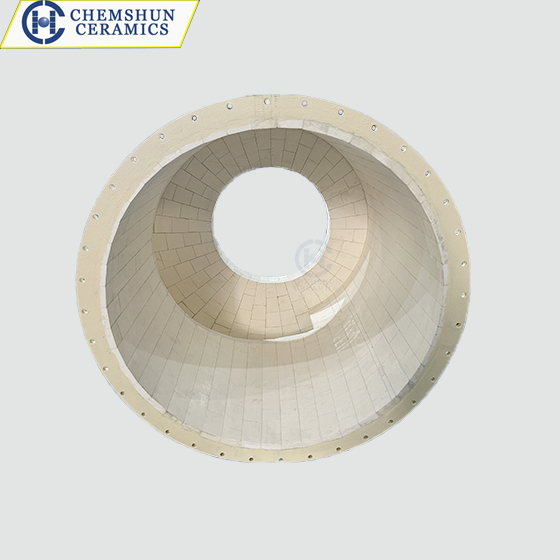
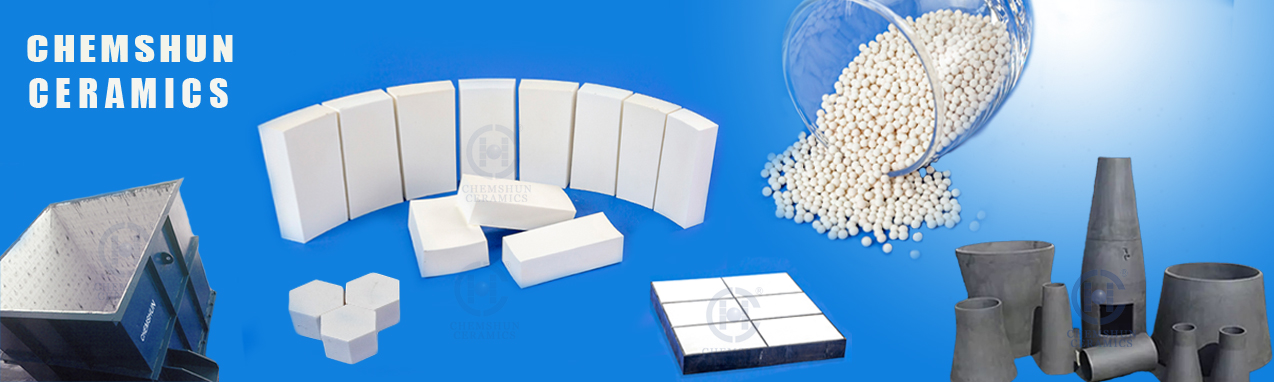
Wear-resistant ceramic tiles are primarily made of aluminum oxide (Al2O3), formed by high-pressure pressing and high-temperature sintering. Their Mohs hardness reaches grade 9, providing high hardness and chemical stability. The tiles are bonded to the agitator tank interior with a dedicated structural adhesive and laid in a staggered pattern to form a dense, continuous rigid protective layer that isolates the steel substrate from the wearing medium.
Core Protective Advantages
Wear and Corrosion Resistance. Alumina ceramic tiles offer outstanding resistance to particle abrasion and slurry erosion. They also resist corrosion and aging in acidic or alkaline slurry environments, combining wear protection with corrosion resistance in a single lining.
Smooth Surface, Reduced Buildup. The ceramic surface is dense and smooth with a low friction coefficient. Material adhesion and scale buildup are minimized, helping maintain the effective tank volume and mixing uniformity.
No Metal Contamination. Alumina ceramic is an inorganic corundum structure with no heavy-metal leaching, making it suitable for lithium-battery raw materials and fine chemicals where material cleanliness is critical.
Installation Adaptability and Customization
Ceramic tiles can be fabricated in square, curved, or custom shapes to match tank dimensions and contour profiles, fitting cylindrical walls, conical bottoms, guide angles, and agitation zones. Localized thickening is available for areas of concentrated wear. Installation can be carried out on the existing tank shell without major modification to the equipment structure. The staggered laying pattern eliminates straight-through joints and reduces the risk of slurry penetration and lining delamination.