

In field applications, detachment and fracturing are the most common failure modes of alumina ceramic liners. In most cases, these failures are not caused by quality issues of the ceramics themselves, but by improper structural design, installation processes, or substrate preparation. This article introduces three mainstream installation structures—adhesive-bonded, bolt-fixed, and composite liners—analyzes the causes of failure, and provides key points for engineering design and construction control.
I. Characteristics of Three Mainstream Installation Structures
1. Adhesive-Bonded Ceramic Liners
High-performance inorganic/organic wear-resistant adhesives are used to bond ceramic liners onto the steel substrate of equipment.
Advantages: Convenient construction, no drilling required, suitable for curved surface modification of pipes and chutes; lightweight, does not damage the original equipment structure.
Limitations: The substrate temperature must not exceed the temperature resistance limit of the adhesive; not suitable for strong impacts from large materials.
Applications: Dust removal ducts, ash hoppers, coal bunker inner walls, cyclone cylinders, etc.
2. Bolt-Fixed Ceramic Liners
Ceramic liners are pre-fabricated with countersunk bolt holes, and bolts are used to lock the ceramic plates onto the steel plate. Plate seams can be filled with sealant.
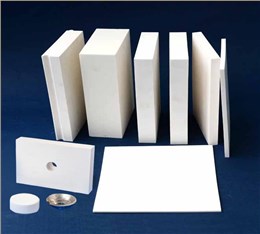 Ceramic Tile Liner
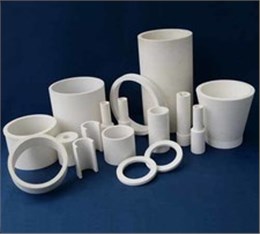 Alumina Ceramic Pipe Liner
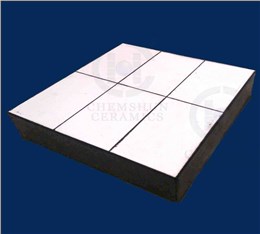 AL92 Ceramic Rubber Chute Liner
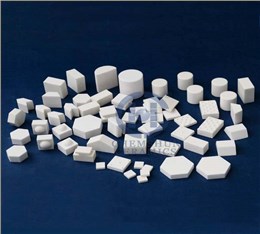 Wear Resistant Ceramic Liner